Skip to content

Does Price Signal Quality Anymore? What Our Brains Say About Expensive Products
Why Does a Higher Price Feel Better?
Open with the tension: Consumers are more sceptical and cost-conscious than ever, often aware that cheaper options can deliver similar results. But their purchase behaviour tells us that price isn’t everything, and that people happily buy more premium and luxury products when the practical, or more often than not emotional, pay-off is worth it.
So why is it that a higher price still feels better?
To understand this tension, it’s important to look into how our brains process price – less like a calculator, and more semiotically. Price isn’t just a number – it’s a signal that we process both rationally and emotionally. Price can make us believe in the quality of a product, and a higher price has historically signalled a higher value, which we can choose to invest in (or not).
But in a world of product parity and savvy shoppers, does price still work as a shorthand for quality?
You know the £10 wine is probably fine. But you still reach for the £18 bottle. Here’s why.

The Psychological Weight of Price
As with many other signals such as visual appearance, brand and ad campaigns, our brains use a product’s price point as a cognitive shortcut – a heuristic for quality, status, and reward.
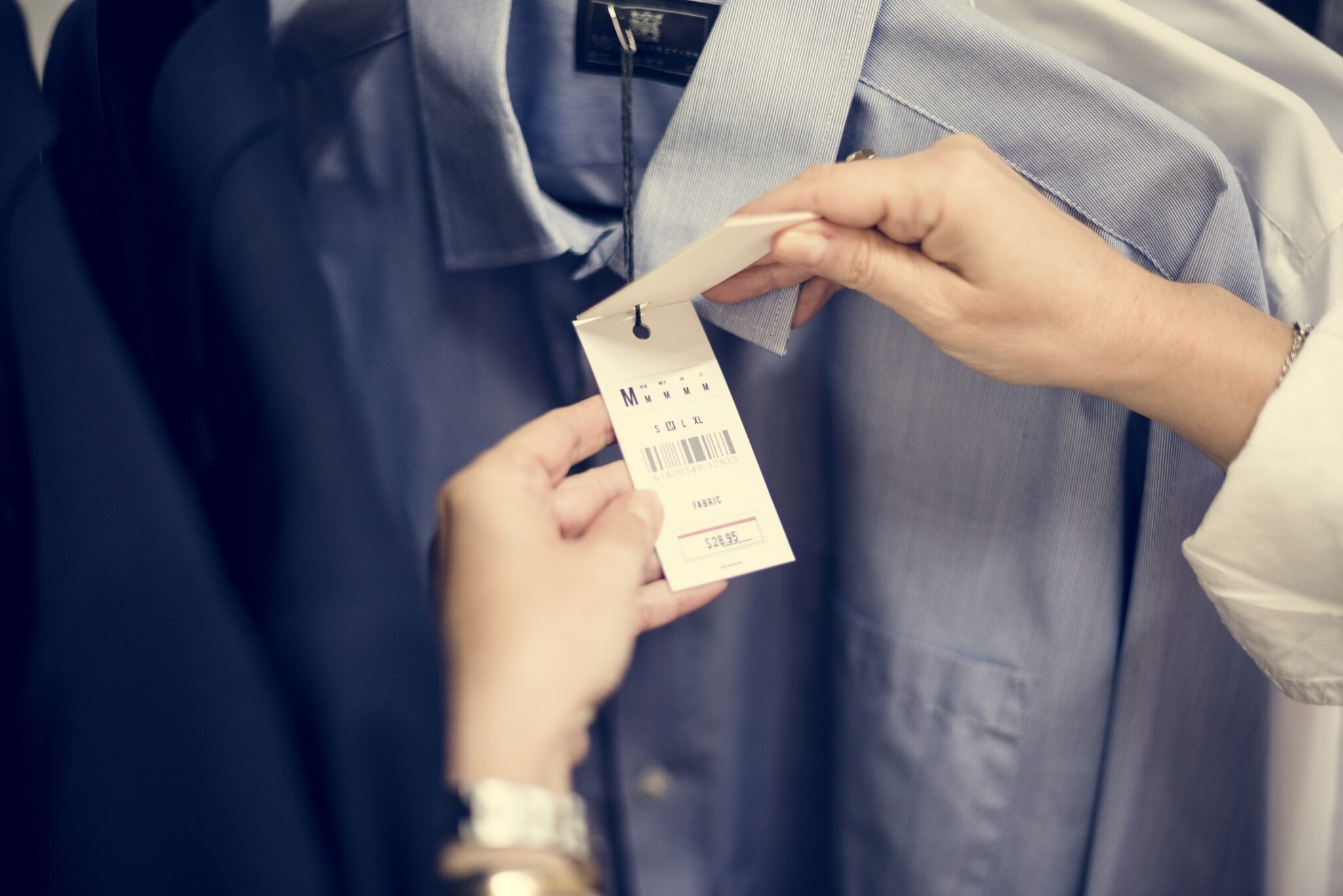
Kahneman’s work on mental shortcuts shows us that we rely on cues like price, especially when information is uncertain or overwhelming. And what could be more overwhelming than our current retail landscapes with its hundreds of available options in store, with many more only a click of a button away?
Higher prices trigger expectations of better performance, even before we have tried the product. More expensive clothes are expected to feel and look better and last longer, while we expect better results from a pricier hairdresser. But it’s not all about objective value: Price is not just a signal of product quality, but also a signal of self-worth or social value. Splurging on a higher priced mascara can feel like more of a reward for a stressful week at work than simply restocking a cheap go-to version, and an expensive car isn’t just for our own enjoyment, but also a signal to neighbours and acquaintances.
Price and Perceived Experience
The price of an item fundamentally changes not just our expectation, but also our experience of said item. This is important to understand, especially when it comes to repeat purchases.
One key example: Wine tasting fMRI studies (e.g. Plassmann et al., 2008) have found that when people believed wine was more expensive, they reported it tasting better – and the areas of their brain related to pleasure also showed stronger activity, ‘lighting up’ more. It’s not simply that we expect more expensive wines to taste better, but our actual experience lines up with this, regardless of a complete lack of difference in product quality. At Mindlab, we have observed similar effects at a much larger scale, with price point influencing quality, luxury, and even heritage expectations, and higher price points in some instances even leading to higher purchase intention.
So are we deluding ourselves into emptying our bank accounts for no objective difference in quality? It’s important to understand that the brain doesn’t just respond to the product – it responds to expectation, shaped by price. These expectations influence our sensory experience: if we expect a product to be smoother, richer, more luxurious… we often feel that it is.
When Price Doesn’t Work
So what’s the solution – rack up your prices? Surely if your brand is more profitable, and consumers enjoy your product more, everybody wins?
It’s important to understand that there are limits to this strategy, and overstepping these boundaries is likely to result in disastrous outcomes.
Price signalling in today’s product landscape is just one part of the puzzle, one aspect of the holistic experience people have of your products. Especially in saturated or highly competitive categories (like FMCG), a high price without perceived justification can feel opportunistic.
When functional parity is high, price needs emotional, aesthetic, or contextual reinforcement. Previous installments of this series have already talked about the hidden dimensions of value (article 2), how the signals of luxury are shifting (article 3) and how to cut through in crowded spaces (article 4), and while the price point is an important signal of luxury, premiumness and quality, it needs to be backed up by other signals, such as finishes, heritage signifiers, and even social proof.
Price alone can’t carry premium perception – it must be paired with story, design, or distinctiveness.
Implications for Brands
So how can you position yourself as a luxury choice? The key take-homes for your brands are as follows:
- Pricing strategy should be linked to emotional cues: Does the design, tone, or provenance match the price tier? We process everything we see holistically, and you need to make sure that the pricing strategy is backed up by other signals you give your potential consumers.
- Invest in expectation-setting: packaging, copy, and brand cues should prime consumers to believe they’re getting something better. Luxury starts in the brain, before people have even had the chance to try your product – make sure that the journey from the first glance to the last sip supports your desired luxury and premium positioning.
- Don’t just benchmark prices – benchmark perceptions. Are you seen as worth more, or just charging more?

Justifying Your Price
In the brain, price is never just a number—it’s a feeling. The brands that get this right don’t just charge more. They’re valued more.
To explore how implicit insight can strengthen pricing strategy and brand stretch potential, please get in touch with us here at Mindlab. We have shaped expectations for premium and super-luxury brands across many sectors. You may also be interested in reading the other parts of this series on premium and luxury perceptions, and what research needs to be mindful of.