 Skip to content

The New Dimensions of Wellness: From Self-Improvement to Self-Connection
Wellness Isn’t What It Used to Be
Productivity hacks, green juices, HIIT at dawn – not too long ago, “wellness” was synonymous with self-discipline. It became a badge to wear to present your own value to others, realise your potential, and constantly work on becoming the best version of yourself.
But in today’s frazzled, post-pandemic world, the idea of “wellness” has seen a noticeable shift: away from striving, toward soothing. Wellness is now less about being the best version of yourself, but rather connecting to your true self, and finding comfort in your place in the world.
This isn’t about dropping standards – it’s about rebalancing. People are redefining what it truly means to feel well, and how this connects to all aspects of their lives. The data backs up this transformation: according to the Global Wellness Institute, the global wellness economy reached US $5.6 trillion in 2022 and is forecast to grow to US $8.5 trillion by 2027, reflecting both its resilience and its evolution beyond traditional health categories.
At Mindlab, we see these shifts emerge in both what people say and what they don’t – through implicit associations, emotional drivers, and intuitive preferences. This article explores how wellness is evolving, and what the new face of wellness means for brands across categories.
From Self-Optimisation to Self-Connection
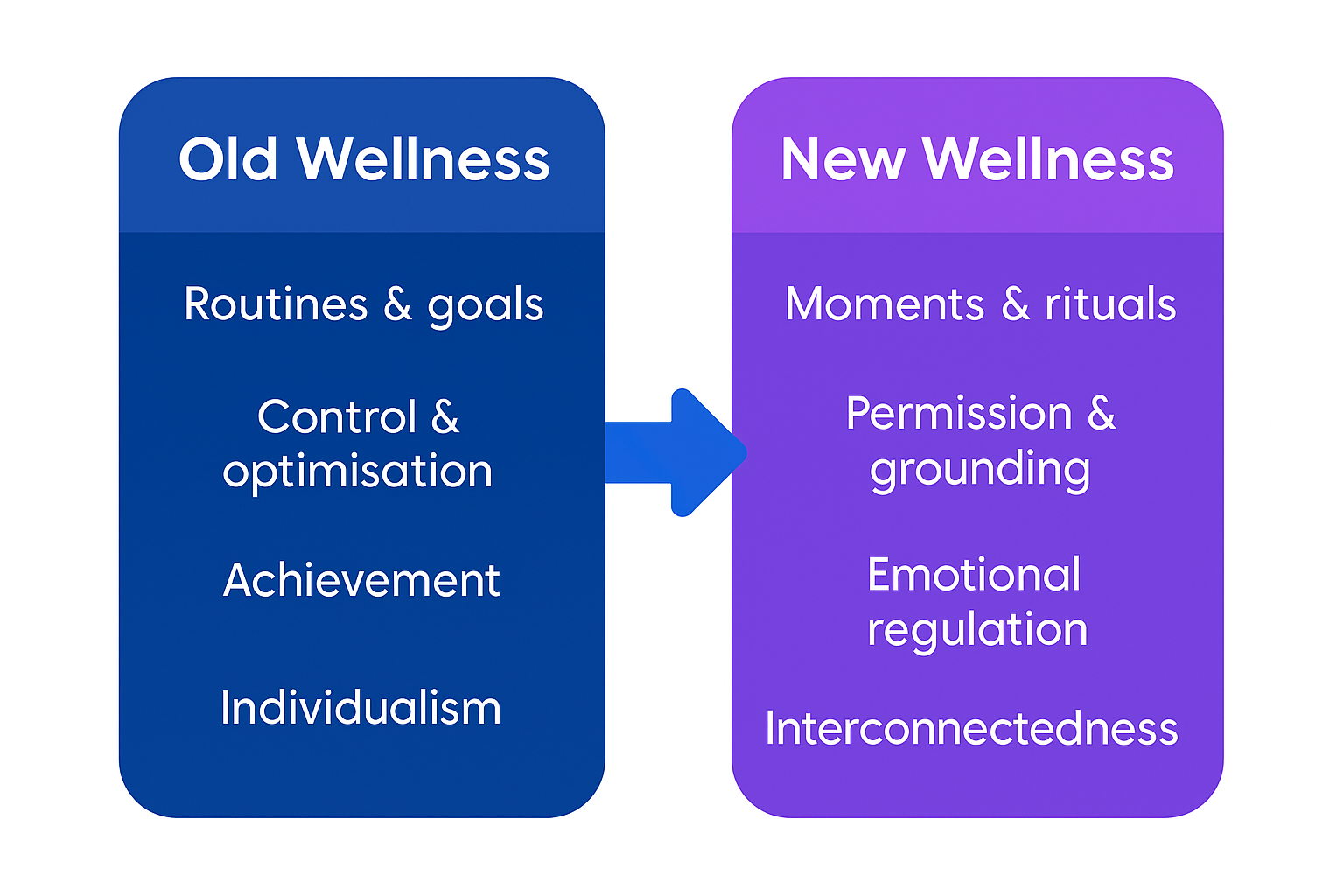
Over the last few years, we have witnessed a core shift of what ‘wellness’ truly means. Old ideas of wellness tended to be goal-oriented, performance-driven, often individualistic and rigid. This is reflected in the type of language and imagery that was used to promote wellness concepts and products, often showing perfect bodies, very specific settings (e.g. yoga studios), and a limitation to a small number of product types. A green smoothie is perhaps the perfect embodiment of this old idea of wellness – it’s good for you, brings you a little step closer to the perfect you, and masquerades as a ‘treat’ without truly being one.
Wellness in 2025, however, is far more emotionally intelligent, collective, and intuitive. The focus of wellness has well and truly shifted to encompass how I feel, not just how I look or what I achieve.
That’s not to say that traditional wellness categories have been left behind. Instead, they’ve managed to reframe their goals and raison d’etre. Think of yoga as grounding vs. calorie-burn, skincare as ritual vs. flaw-fixer, alcohol moderation as choice vs. virtue signalling.
Similarly to how luxury has seen a shift towards individualised treats and the feeling of premiumness over and above hollow symbolism, we’re seeing consumers more broadly respond more strongly to cues of emotional alignment than achievement.
Wellness Is Getting Emotional
Wellness in 2026 is more inward-looking than about how you present to the rest of the world. Specifically, wellness now speaks to inner states:
It’s not just about the body, it’s about the nervous system. Across categories, consumers are gravitating toward brands that help them regulate emotions: stress, overstimulation, burnout, and loneliness. According to NielsenIQ, consumers plan to do more low-effort self-care routines such as spending time in nature (60%), massage or relaxation (40%), yoga or meditation (35%), and aromatherapy (24%).
This opens up new spaces: softness, nostalgia, quietness, even boredom is being embraced by consumers. This opens up a whole emotional pallet that has previously been avoided in fast-paced branding.
In beauty, best-selling products now highlight comfort (not transformation). In the drinks industry, low/no alcohol offerings are now developed to still feel celebratory, not punitive. In media, slow TV, cosy content, and ambient sounds all present forms of emotional “shelter.” You may think that people’s attention span has reduced dramatically, but content providing emotional comfort and soothing now makes up a large corner of TikTok, from ASMR to short-form documentaries.
But the idea of wellness is not just shifting, it is also getting broader.
The Rise of Micro-Wellness Moments
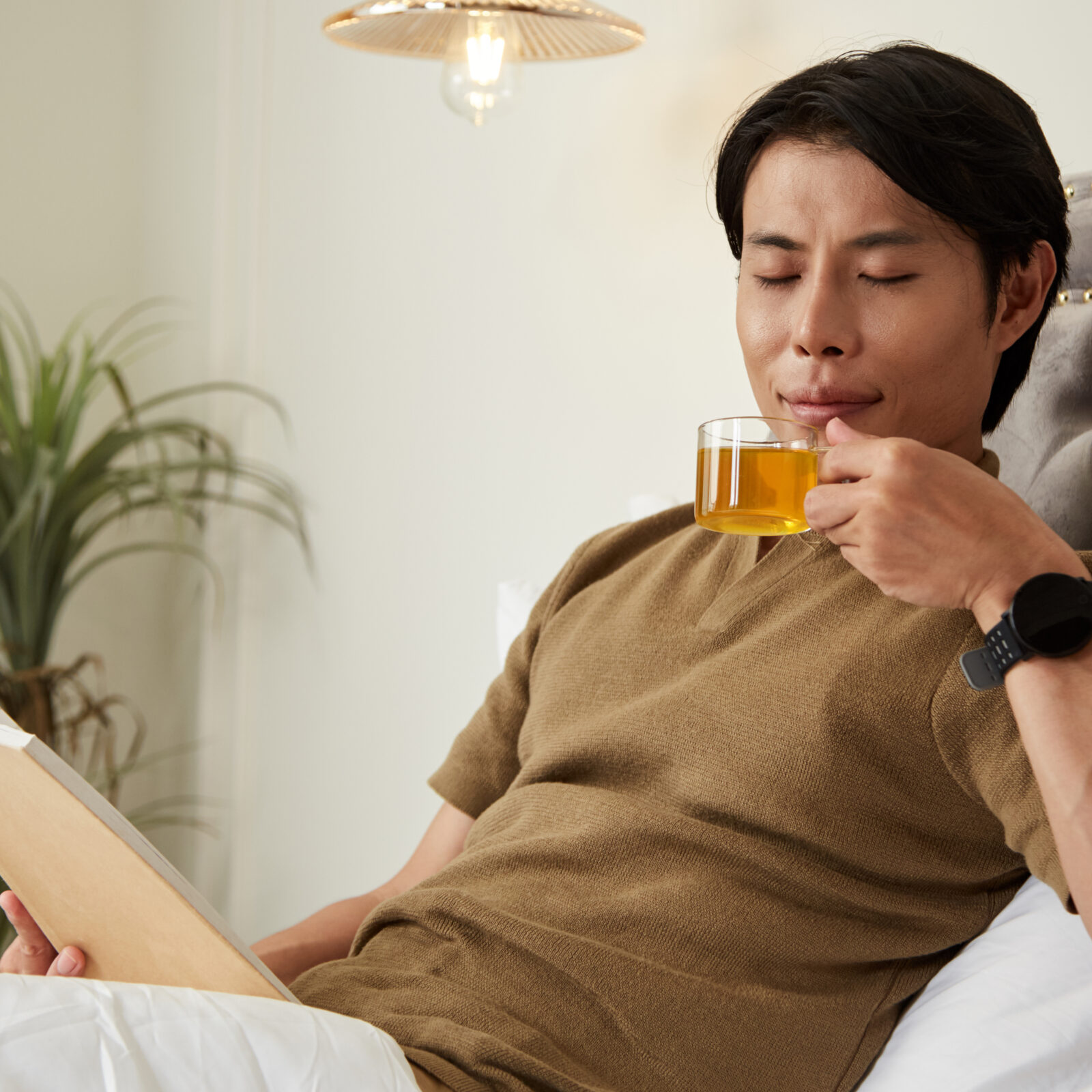
Instead of a complete wellness lifestyle, most consumers are now embracing tiny, everyday moments of well-being – a texture, a scent, a sip, a sound. Rather than just carving out intentional moments in a day to dedicate to a rigid idea of ‘wellness’, consumers seek out wellness throughout many more choices they make.
This shift to micro-wellness moments makes wellness far accessible, but also demands brands to pay far more attention to the sensory and emotional cues they send out into the world.
As a brand, think beyond grand gestures, and lean into subtle invitations. Show your customers that you listen to them, that your product truly is for them, and that you have your well-being at the heart of your decision-making.
In a world where wellness plays a role in many more aspects of people’s lives, brands need to get better at signalling well-being implicitly – through design, UX, product cues, and tone.
What This Means for Brands
In order to tap into the widening importance of wellness in the world of your consumers, always take into account the following”
- Tap into emotional, not just functional benefits – e.g., not “healthy,” but “relieving,” “nourishing,” “soothing.”
- Design for how people want to feel, not just what they want to achieve.
- Focus on small sensory shifts that offer grounding: packaging, pacing, rituals, storytelling.
- Help consumers connect – to themselves, their feelings, their rituals – not just improve.

Reclaiming Wellness
People aren’t abandoning wellness – they’re reclaiming it. Brands that understand this emotional evolution will feel more human, more useful, and more in tune, and have a competitive edge in a crowded marketplace.
At Mindlab, we help brands uncover the emotional and implicit drivers of consumer behaviour – even when those behaviours are shifting fast.
Curious what wellness means for your category? Let’s talk.


