 Skip to content

Beyond Price and Promos: The Implicit Drivers of Shopper Behaviour
Inside the Shopper Mind Series (article 2): How People Really Make Purchase Decisions
If you ask people why they chose a particular product, they’ll usually give you a sensible, logical answer.
“It was on offer.”
“I liked the packaging.”
“It had good reviews.”
And sometimes, that’s true.
But more often than not, these explanations are backfilled after the choice is already made.
In reality, most shopper decisions happen far faster and far less consciously than we tend to assume. They are shaped not by careful comparison, but by emotional shortcuts and heuristics – the feelings, associations and cues that tell us when something is right for us, often before we can articulate why.
This is why two products that look very similar, cost roughly the same, and claim to offer nearly identical benefits can perform wildly differently in-store or online.
What separates them isn’t just function – it’s meaning.

We Think We’re Weighing Up Options. Instead, we’re Mostly Sensing Our Way Through Them.
When we shop, especially for everyday categories, our brains aren’t conducting a rational evaluation. In fact, consciously weighing up every single option available to us would bring everything we do to a grinding halt – who really could construct a mental pros and cons list when deciding which wine to buy? To help us navigate the world, our brains are doing something far more efficient:
- Recognising what looks familiar,
- Filtering out what feels irrelevant,
- Judging emotional fit,
- And selecting what aligns with our identity and desired state.
All of this happens in a matter of milliseconds. Our brains are remarkably fast at determining “yes, this” or “not quite that.” We then build a rational explanation afterwards – not to decide, but to justify what we’ve already chosen.
This doesn’t make us irrational. It makes us human.
The Invisible Forces That Shape Shopper Choice
Looking beneath conscious reasoning, we see four primary emotional drivers emerge again and again across categories.
1. Familiarity & Fluency
Things we’ve seen before, or can process easily, feel better. We are drawn towards options that conjure up a feeling of familiarity in us, something that feels relevant to us personally on a gut level.
A brand we recognise in a crowded aisle cuts through the noise.
A label that’s clear at a glance feels more trustworthy.
Simple design isn’t just aesthetic – it reduces cognitive effort.
Ease itself is persuasive.
If something is easy to understand, it feels right.
2. Identity & Self-Relevance
We choose products that say something about who we are – or who we want to be.
Sometimes that identity is outward-facing (the drink we bring to a dinner). Sometimes it’s private (the moisturiser we use at home). But in both cases, the product carries personal meaning.
This is subtle, emotional, and rarely verbalised in research. Yet this personal relevance and link to our perceived self-identity is one of the strongest drivers of brand affinity.
3. Emotional Memory
Brands we’ve had positive past experiences with develop a sort of emotional shorthand.
- The scent of a detergent that smells like home

- The mouthfeel of a chocolate that evokes comfort
- The bottle shape we’ve come to associate with weekend rituals
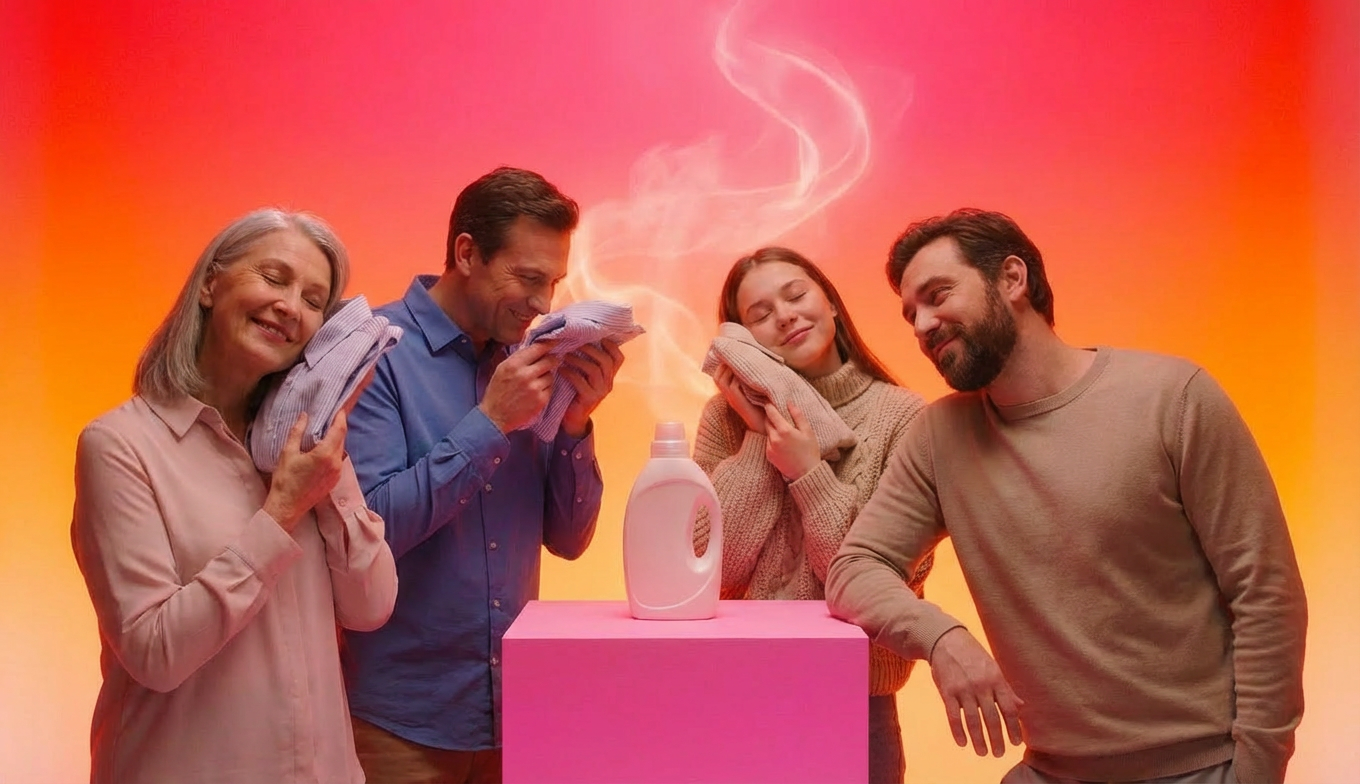
These cues operate below conscious awareness.
We don’t need to consciously remember the memory itself. Instead, we remember the feeling.
And these feelings are powerful decision anchors.
The Trouble With Asking Shoppers Directly
Traditional research often struggles to reflect the types of decision drivers outlined above. This is because people can’t articulate emotional drivers they aren’t consciously aware of. It’s not a question of lying or misrepresenting the truth – we genuinely make ourselves believe that the post-rationalised answers we gave truly are the reasons we made a purchase.
In addition to the lack of self-reflective ability, social desirability also shapes responses in traditional research. This can often be seen in perceived say-do gaps when researching topics such as environmental factors, with people often claiming to act far more altruistically than they really do.
Finally, we often assume rationality because it feels good to believe we’re logical. Especially when it comes to high-value purchases, it’s hard to admit that emotion was not only one of, but rather the key driver of our choice – surely the expensive car you bought was selected purely on its impressive specs, and is the practical choice for you and your family.
But when we test implicitly – when we measure responses, not reasoning – a much clearer, more accurate picture of our decision drivers emerges.
What actually drives choice is:
- How quickly a product is recognised
- What emotional associations it carries
- How aligned it is with personal identity
- And how easy it is to justify in the moment
These are the factors that truly underlie our choices – not the bullet-point features on the product page.

What This Means for Brands and Retailers
Understanding implicit drivers isn’t an academic exercise. Implicit market research doesn’t create shelfware and nice-to-know stats. Instead, if done right, it directly shapes commercial outcomes.
To influence behaviour, brands need to ask:
- Does this product feel familiar, comfortable and recognisable at a glance?
- Does the brand express the identity our consumers want to reinforce?
- Does the sensory and emotional experience evoke something meaningful?
- Does our design make choosing feel effortless?
When these elements work together, choice becomes intuitive. When they don’t, no amount of rational messaging will fix the gap.
Because the shopper isn’t choosing the “best” option. They’re choosing the one that feels most like them.
In the next part of this series, we will look at how these decision drivers (as well as the messy journey outlined in part 1) play out on shelf, in physical stores.
If you’d like to find out more about how you can use implicit market research to help you highlight the factors that will get your product picked, to get in touch for a free discovery session.


